Every item we use, from the coffee in our morning cup to the clothes we wear, has a journey that continues after they are discarded. Yet, we rarely think about where all these “waste” ends up after they are no longer useful to us. Have you ever wondered what becomes of things that we discard?
Municipal Solid Waste
Today, Malaysia generates close to 40,000 tonnes of municipal solid waste (MSW) every day, equivalent to 1.17 kg per person per day. About 46% of this is comprised of food and organic waste. It is also known that as GDP per capita increases, the quantity of MSW per capita increases (see graph below). In addition to growing waste per capita, with Malaysia’s population growing at an average of 1.2% annually, the quantity of MSW will increase substantially, especially in urban areas.
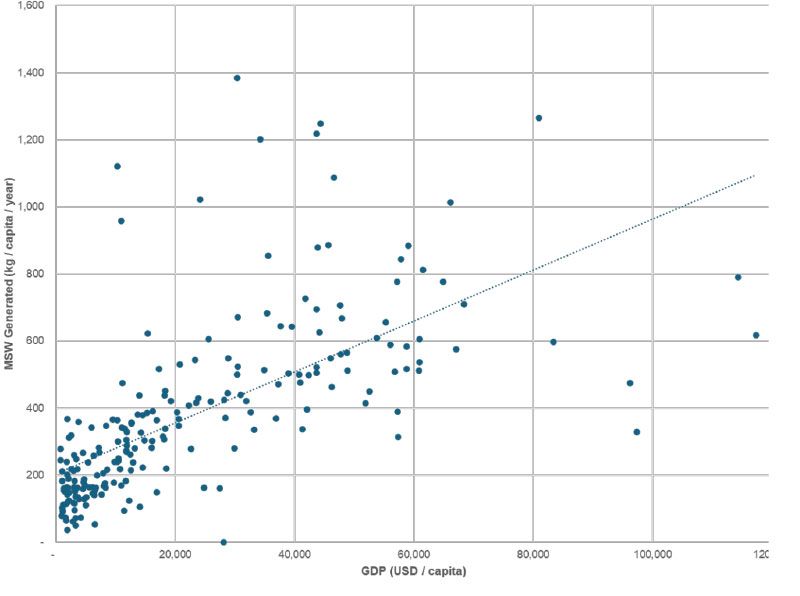
Data from World Bank Group: What A Waste Global Database
Worryingly, Malaysia’s recycling rate is less than 40%. The rest of the non-recycled and non-recyclable waste ends up in landfills that are fast approaching their operational limits. At current trends, many current landfills will approach their full capacity by 2050. New landfills will need to be developed, presumably further away from urban areas for cheaper land cost - but that also means higher transport cost. Therefore, landfilling cannot be the primary method of MSW management going forward - it’ll just be too expensive and not sustainable.
It’s an opportune time for a re-think of our approach to waste. Instead of treating waste as something to get rid of, we should ask: how can we generate value from this “waste”? After all, "one man's trash is another man's treasure“. Do these materials have the potential to be reused or recycled back into the economy, instead of being treated as waste?
The Four Pathways
If a sufficient quantity of materials gets circulated back, there will be sufficient economies of scale, and the dependence on landfills reduces. In order for this to be a reality, there are four pathways that can be applied - probably in combinations of each other:
01 Waste Prevention
Reduce & Reuse
02 Biological Processing
Recycle
03 Material Recovery
Recycle & Upcycling
04 Energy Recovery
Recover
Pathway 1: Waste Prevention
The easiest method to manage waste is to prevent it from being generated in the first place. Firstly, we need to shift away from single use formats to reuse and refill systems where practical. Although this is easier said than done, but with appropriate regulatory interventions and incentives, it may just be possible. Case in point is the ban on plastic bags - it was easily achieved with sufficient political willpower.
Life extension is the second part of waste prevention. Terms like design-for-maintenance, design-for-repair, and design-for-durability comes to mind in the design of products. Together with appropriate policies and incentives: for example, through repairability labels and right to repair provisions, prevention delivers the highest environmental impact. Naturally, these may not align with corporate goals to increase both the top and bottom lines. There must be ways to increase shareholder value without unconsciously and indirectly costing the environment.
Pathway 2: Biological Processing
Biological processing keeps organic materials cycling in the biosphere by converting them into nutrients or soil amendments. This can take several forms. At the simpler end, composting transforms food scraps and green waste into stable compost that improves the soil for agriculture. Alternatively, anaerobic digestion breaks down organics without oxygen to produce biogas. For higher value recovery, insect bioconversion (e.g., black soldier fly larvae) turns food waste into protein for animal feed, plus by products usable as a soil conditioner.
However, the success of this pathway hinges on clean feedstock: source separation, de-packaging where needed, and strict contamination control to meet feed and fertiliser standards. Incentivising and promoting the business eco-system for this biological processing is critical to creating this circular economy, where organic waste is turned into “raw materials” for another industry.
Pathway 3: Material Recovery & Upcycling
Yes, it is a fancy term for what we call recycling. Material recovery and upcycling is to keep materials in the economic cycle by turning waste back into higher value products. At the “recovery” end, there are a few options:
- Clean streams of paper, metals, glass, and many plastics can be mechanically sorted, cleaned, and reprocessed into secondary raw materials that displace virgin inputs. This is viable for many materials today, but challenges remain in the sortation of the materials.
- Waste Electrical and Electronic Equipment (”WEEE”) can yield copper, aluminum, precious, and critical metals - valuable materials in today’s world that are required in electronics manufacturing. With the scarcity of some of these materials, it may be economically viable (and probably more environmentally friendly) to recovery them from WEEE instead of mining them.
- Pyrolysis can turn mixed or contaminated polymers or food waste into fuel or oils. However, the economics of this depends on the price and quantity of the oils that can be extracted against the high capital outlay. The prime inhibitor for widespread adoption of this technology is the high capital costs and uncertain (and unproven) outputs.
“Upcycling” is to create equal or better utility or better performing materials. Examples include turning multilayer plastic films into durable boards, textile blends into engineered fibers, glass cullet into high value pozzolans, and ocean bound plastics into consumer goods with verified traceability.
What is necessary to make this work at scale is contamination control through source separation and pre sorting. Not forgetting the source of all these lies in well-designed products, i.e., they are designed for recycling so that products can re enter the circular loop when they are created.
Pathway 4: Energy Recovery
Waste-to-Energy (WTE) is more than a disposal solution: it is a complementary pillar that converts waste into usable energy while supporting other recovery pathways. Malaysia’s mixed and high-moisture waste composition provides significant challenges to this technology - requiring pre-processing, reducing combustion efficiency through low calorific values of waste, and thereby potentially increasing pollutant output.
Public concern about WTE often centres on emissions and ash management, and rightfully so. Poor management of incineration can release dioxin, furans, and particulate matter (”PM”), while untreated toxic residues can leach heavy metals into the soil, causing soil and groundwater contamination.
However, recent WTE technologies have evolved significantly. Today’s facilities incorporate multi-layered emission control systems. It includes technologies capable of reducing PM levels and dioxin emission to levels that to meet EU and Japan standards.
Creating MSW Circular Economy
Oftentimes, economics, together with policy and regulations, dictate what can or cannot be done. Unfortunately, environmental considerations almost never factor in our decision-making - unless, of course, when it is regulated and enforced.
In spite of the lack of visibility on the economics of these pathways, several steps can be implemented to facilitate and reduce the barrier to kick-start the circular economy centred on MSW:
1. Waste Segregation
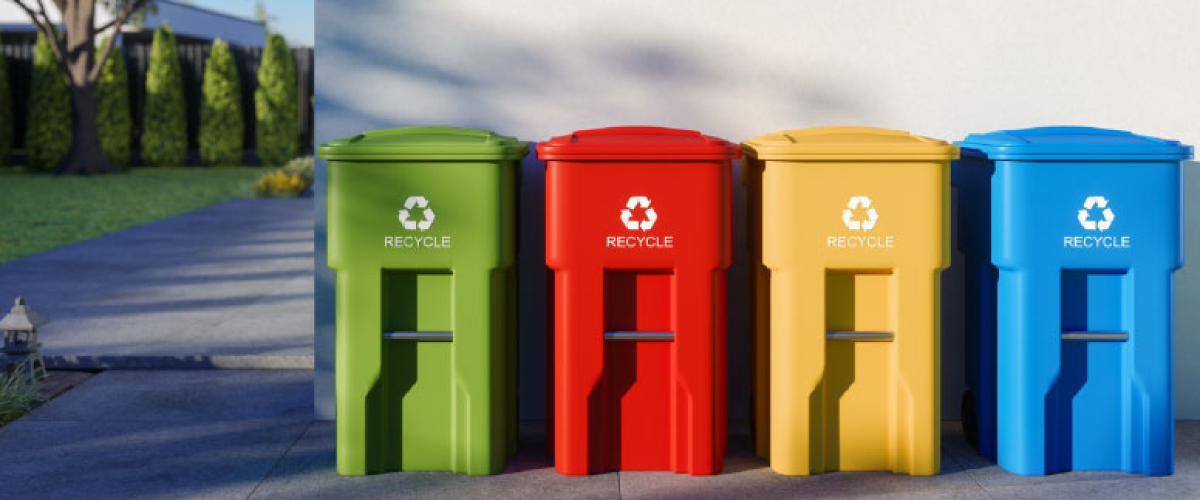
Waste segregation at source is a critical step for all four pathways. While steps have already been taken, the implementation in practice remains inconsistent. Seeing “rubbish collectors” take the neatly separated waste and throw them into the same pile of waste can be deeply discouraging. There are still different interpretations or misconceptions amongst the public of what each type of waste means - just peek into the separated bins meant for paper, or plastic, or other types of recyclables, and you will probably be disheartened.
2. Policy, Education & Enforcement
Naturally, an effective waste separation mandate needs to come from a national or state-wide policy, which is then followed up with education and enforcement. Education does not just happen in schools - it has to be a society-wide education on why, what, and how it will be done. Without enforcement (or at least monitoring to start with), it will not work either.
3. Improve Public Trust
Arguably, no one wants to have a waste sorting plant or a WTE next to their house. This stems from valid concerns about emissions, odour, and property value impact. Most critically, it stems from a lack of public trust as a result of the lack of transparency, information, and data provided. Public engagement is dreaded by all parties developing a project like this, but it is critical to win the trust of the public through transparent and informative engagements.
With the right steps to reduce the barriers to entry, the economics will certainly follow - and when economics work, investments will naturally come. This gives us an inspiration for something we should write next: what’s the economics for some of these ideas?